


DOC’s Intentions Books (also known as. hut books) are a vital tool for search and rescue. In this blog post, Land Search and Rescue and DOC team up to explain about what they are and how to use them.
What are intentions books?
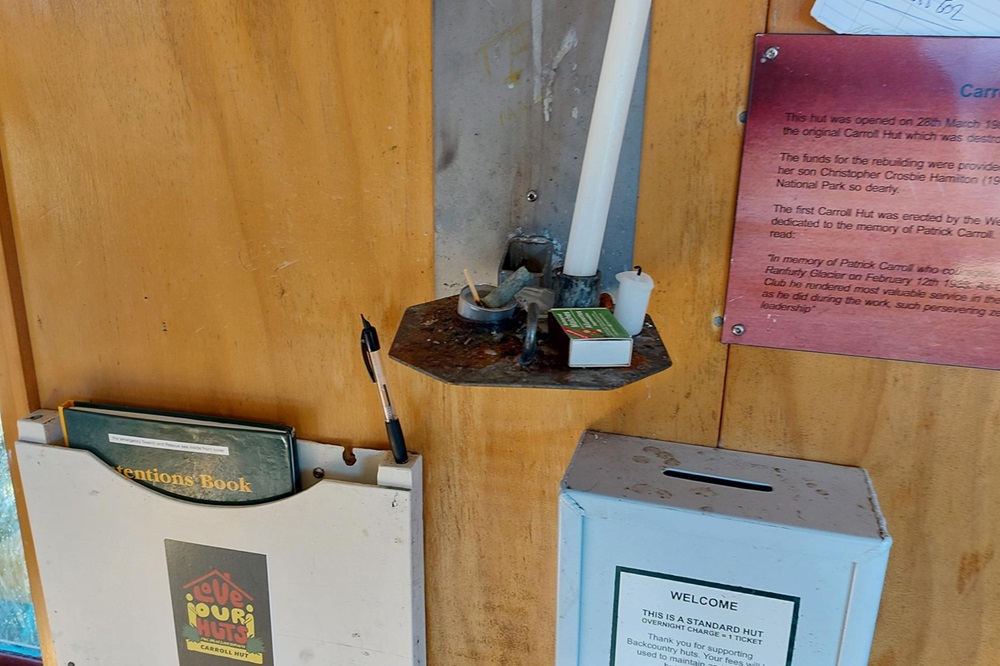
These green books sit in every DOC hut. They have columns where visitors can record information about their trip plans (their intentions). This includes the number of people in your group and their names, date of arrival and departure, planned route from the hut, weather conditions and any comments.
You can also list your Backcountry Hut Pass number, if you have one – however, you don’t need a Backcountry Hut Pass to use the intentions book. It’s still important that you fill out the book even if you don’t have a hut pass.
Intentions books have useful safety information in the front of them, so it’s worth having a read.
Who can use one?
Everyone! We encourage anyone who passes a hut to fill in the intentions book, even if you aren’t staying the night or if you booked the hut online.
As well as writing in an intentions book, it’s also good to read one when you pass it. There may be important messages left in there.
Spot the Intentions Book 🔍


How do intentions books get used in a search and rescue?
Search and Rescue is often an intelligence-led activity. The more information searchers can collect, the better chance they have of understanding what happened and finding the missing person.
Intention books are an important part of gathering that information.
If a missing person has written their intentions into a book, it provides a last known point and helps narrow the search area.
Earlier this year, intentions book entries helped a search team find an overdue walker on the West Coast. The search team checked hut book entries and found that the walker had left details of his planned route in two hut books. This led the team to where to search and they found the missing walker alive and well.
Intentions book entries from people who aren’t missing can still help search and rescue teams. These are potential witnesses who could confirm to searchers whether the missing person has been seen at the hut, elsewhere, or not at all. It also helps searchers work out whether tracks/traces that they find belong to the missing person, or if they could have been left by other people in the same area.
Intentions books can also be used in searches to pass messages. If search and rescue teams visit a hut, they can leave a message for the subject of their search, telling them what to do if they reach that hut.
What should I write in an intentions book?
The more information you can put in there, the more it will help in a search and rescue.
We recommend that you describe your planned route from the hut in detail, so it would be clear to potential searchers exactly what route you were taking.
There is a comments section in the intentions book too, which is a useful place to share information about track conditions or other things that other track/hut users might need to know. For example, if you saw a wasp nest near one of the tracks leading to the hut, you could write in the comments section to look out for wasps on that track.
For telling us about accidents, safety issues or damage, phone 0800 DOC HOT, or if it’s not urgent, you could also use our web forms to report damage or accidents or safety issues, or talk to a local DOC Visitor Centre.


I have stayed in Sandy Bay hut twice in the last two months and neither time was there an intentions book or pen available to write a note. I pointed this out in my trip review to DOC but got no response. Te Urewera has become a neglected, forgotten park. We purchased hut tickets based on it being a “serviced hut” but there was no evidence of a ranger being there in months…not even firewood in the shed. A great shame!
Thanks for the feedback Derek, we will pass on the message about intentions books to the Te Urewera team.
Great breakdown of why intentions books are so important! I always make a habit of filling them in, but I hadn’t considered reading through them for potential updates from other hikers—such a simple way to stay informed. Are there any plans to digitize this system in the future, or is the paper format preferred for reliability in the backcountry?
There are currently no plans to replace the intentions book with a digital process, although there are digital tools like Mountain Safety Counci’s Plan My Walk app which include an intentions form for trusted contacts.
We had a hut book, which was full of very good information for all those that needed to use the hut, BUT DOC Ohakune decided they had a better use it and removed it!!
Never to be returned!
Full books are removed from a hut and replaced with a new book. That is because old books left in the hut in the past have sometimes been vandalised or destroyed (e.g. used as fuel to start a fire).
We can understand that it would be frustrating to arrive at a hut hoping to learn from those who have been there before, only to find an empty new book. It may well seem like the luck of the draw, and probably is, but hopefully you can understand why that may have happened.
Perhaps if a note was stuck on the outside of the book cover, asking patrons to please leave a message in the book. Short reasons.
Thanks Anne, we’ll pass on the feedback.
If I stay at a hut and note the previous night’s occupants have left the hut without writing in the book, I’ll do it on their behalf and if I don’t know their names, I’ll put in a descriptor e.g. young Australian couple. Sometimes about a third or half of the occupants have neglected to write their names etc. in the book. Often they simply overlook doing it. Sometimes the destination is ambiguous e.g. ‘road end’ when there are several possibilities.
I’ve heard that DOC estimate that only a third of the occupants are recorded in the hut books. It’s a shame that we lost the intentions books at the road end. It was useful to know there were already people headed to that two-person biv. But I get that DOC didn’t want the burden of checking the intentions books all the time and then being obliged to follow it up if people hadn’t signed out.
Thanks Honora. Yes, it was decided that road end intentions were better served through leaving appropriate details with a more reliable and secure information provider or source. The road end intentions books were creating a false impression that intentions were being actively monitored.