Archives For 30/11/1999

Every Monday Jobs at DOC takes you behind the scenes and into the jobs, the challenges, the highlights, and the personalities of the people who work at the Department of Conservation.

This week we meet Community Relations Officer, Ron Hazeldine

Constructing the new Denniston Experience. A must-see for everyone!

At work

Name: Ron Hazeldine (aka Hazey)

Position:  Community Relations Officer (Statutory Land Management), West Coast Conservancy, Hokitika

What kind of things do you do in your role? 

Acquisitions, disposals, exchanges, e-dealings, and I help others solve the mysteries of statutory land management functions. 

What is the best part about your job?

It’s twofold really; being part of a team whose efforts benefit conservation by acquiring high value land and disposing low conservation value land that can be used for other purposes. I also get immense satisfaction from being the Public Services Association (PSA) national delegate for the West Coast and I hope that members have benefited as a result.

Painting the old brake wheel at Denniston

What is the hardest part about your job? 

Working for DOC is great. How can that be hard? Though sometimes my crystal clear and very rational views on some subjects fall on deaf ears, so that’s probably the hardest thing I deal with.

What was your highlight from the month just gone? 

Organising a third successful fundraiser for the Hokitika Music Club at Hokitika’s Regent Theatre. Another $2,500 towards a new live sound system…

Playing at Hokitika Wild Food Festival 2010

The rule of three

Three loves

  1. My family (wife Jill and miniature poodle Pero)
  2. Country music
  3. Golf

    Mutsuki, one of six Japanese daughters we have hosted while they attend Westland High School

Three pet peeves

  1. I started too late in music (brought my first guitar in 19*# and left it in hibernation for 30 years)
  2. Golf is getting harder and harder
  3. DOC staff do not get rewarded as well as they should for the contribution they make to New Zealand

Three things always in your fridge

  1. Pepsi Max
  2. Tomato sauce
  3. Amstel Light, the best beer on the market

Three favourite places in New Zealand

  1. Hokitika of course
  2. Granity
  3. Denniston in the Buller and any half decent golf course

Mt Cook in all its glory from the Hokitika Golf Links

Favourite movie, album, book

  1. Movie: I’m not a movie buff at all, but I laughed all the way through The Hangover
  2. Album: Diamonds in the Sun by Walt Wilkins, a Texan country singer
  3. Book: The latest copy of Acoustic Guitar Magazine. I am not a deep and meaningful reader like Bruce McKinlay!

Deep and meaningful

What piece of advice would you tell your 18 year old self?

I don’t have many regrets but I would probably say that I should not have put my guitar in hibernation all those years ago and I definitely should not have stopped taking flying lessons.

Who or what inspires you and why?

Being a simple lad from Ruatapu, a satellite city of about 30 people 12 kms south of Hokitika, inspiration was probably an unknown commodity. But thinking about it now, watching Jack Nicklaus on a black and white telly inspired me to take up golf. In later years, working for DOC inspired me to become a PSA delegate.

Pero, around whom life revolves in our household

When you were a kid, what did you want to be when you grew up?

A pilot or a professional golfer. The first was too expensive and I lacked the talent for the second. Bugger!

And now, if you weren’t working at DOC, what would you want to be?

I would give my eye teeth to be a professional musician. Whoops, a pink pig just flew by the window. Perhaps being a luthier making guitars is more achievable.

If you could be any New Zealand native species for a day, what would you be and why?

A kārearea—fast and fearless, because I am neither.

What piece of advice or message would you want to give to New Zealanders when it comes to conservation?

Conservation is vitally important to New Zealand, and it can and is contributing in many ways. But if it does not contribute economically then the risk is it will be seen as unimportant or worse, irrelevant. DOC can’t do it all. Time will tell whether or not we can convince others of the value of conservation, but it is better to have tried and failed than to not have tried at all.

In today’s economic climate it’s getting harder to achieve all the conservation challenges facing us. DOC’s way forward is in developing relationships with communities and businesses to help achieve our conservation goals. So it’s great when local businesses offer a helping hand.

Here in South Westland the Biodiversity Team got a boost when Local Helicopter operator Michael “Clutch” Glynn of Mountain Helicopters donated over $6000 flying time to threatened species protection. Thanks to Clutch’s generosity we’ve been able to improve our knowledge of a recently discovered population of skinks and unearth some rare land leeches on a coastal rock stack.

Boy’s team pick up from the razor back ridge of a West Coast rock stack

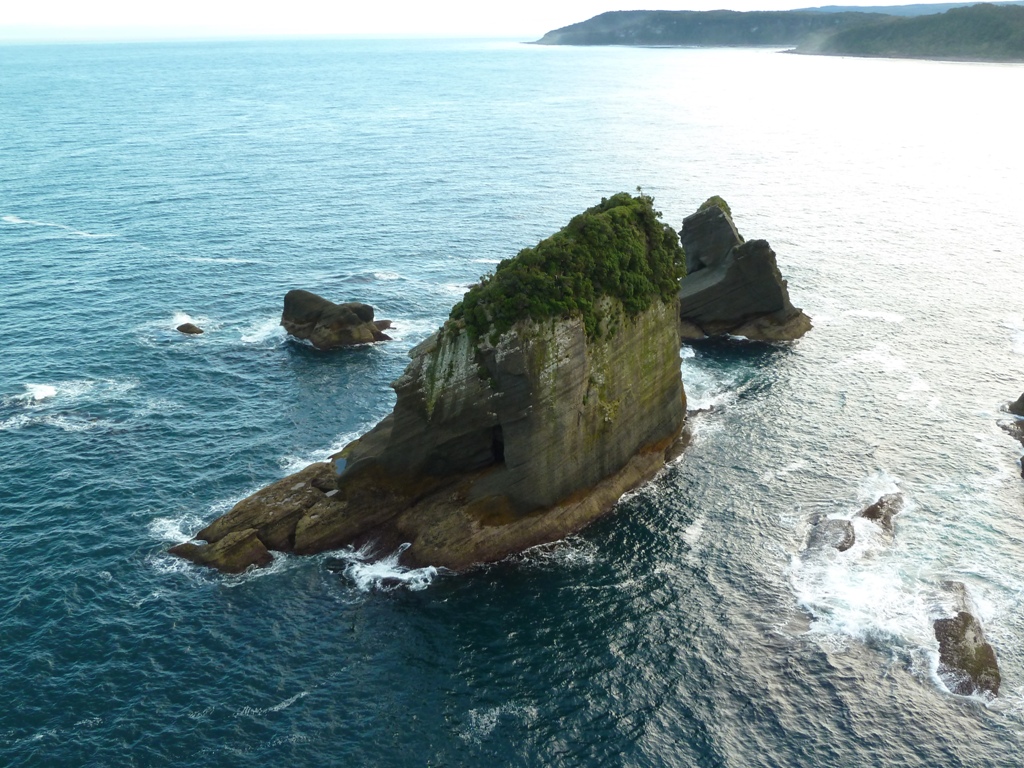
Last year DOC Marine expert Don Neale made an unexpected discovery of skinks basking on a small, vegetated rock stack  during a survey of islands and stacks along the West Coast Tai Poutini coastline. This was a pretty significant find, as the only other lizards known to live on West Coast islands are the endemic Taumaka skink (Oligosoma taumakae) and gecko (Hoplodactylus “Open Bay Islands gecko”). These are two of the rarest lizard species in New Zealand and they’re only found on Taumaka me Popotai (Open Bay Islands).

How many basking skinks can you count?

The Mountain Helicopters donation gave us a chance to get back this summer with lizard expert Marieke Lettink to find out what species these skinks are. They could be related to the Taumaka skink or the cryptic skink (Oligosoma acrinasum) found on the mainland, or maybe we have found a new species altogether….

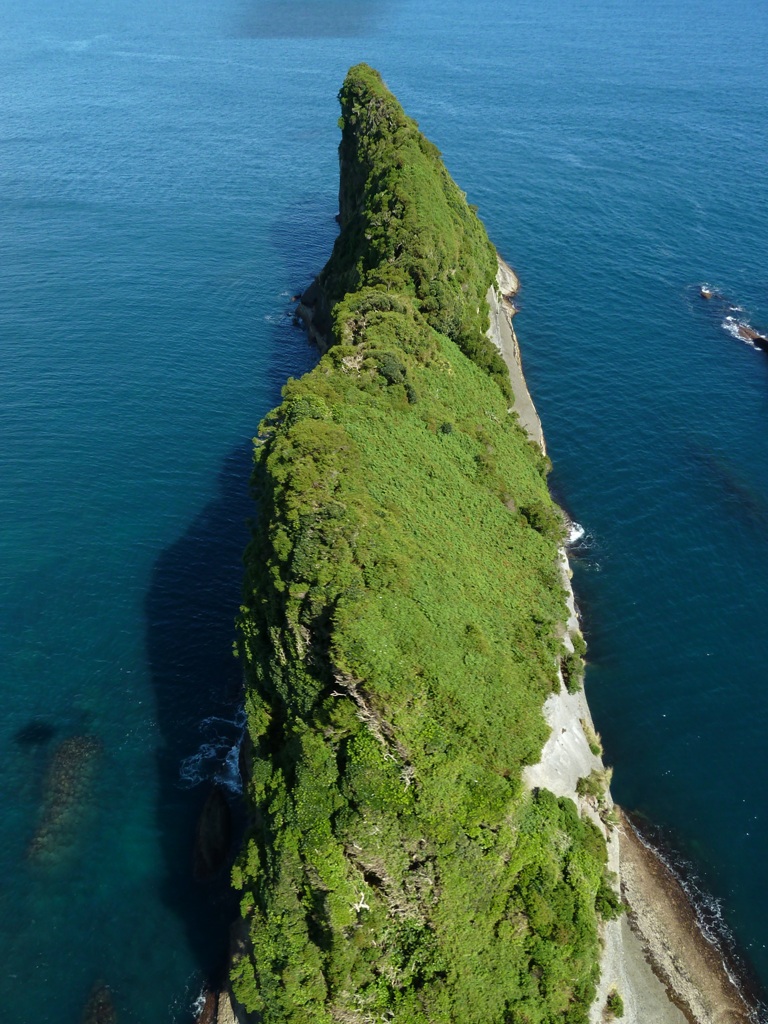
Getting out there was a bit hairy, as the stacks are very steep and skinny and we were thankful for the skill and experience of pilot Nathan Healey in depositing and removing us safely.

Flying over the larger stack

In a bit of a battle of the sexes Marieke and I, pitted our lizard wrangling skills against the boy’s team, Programme Manager Gareth Hopkins and Ranger Jeff Rawles, on a larger neighbouring rock stack. I have to admit the girls had a head start as we already knew there were skinks on our island.

Small West Coast rock stack from the air

Mostly we caught the skinks using cage traps baited with tinned pear, but Marieke with her lizarding superhero skills caught a few by hand. We got very excited when the boys radioed to say they’d spotted skinks on their stack too!

Herpetologist Marieke Lettink takes care not to lose this slippery skink as she extracts it from the trap

Although their home is restricted to 2 very small island stacks the population seems to be doing really well. We saw lots of juvenile skinks as well as the adults, so they’re definitely breeding.


Juvenile skink

Once a skink was caught we weighed and measured it and took diagnostic photos of scale patterns to get an idea of how this population fits into the skink family tree.

A skink in the bag is worth 2 in the bush: DOC ranger Rebecca Wilson weighs this one

Based on physical appearance these skinks look like they are related to Taumaka skinks. There were some differences though, so we’re waiting for the results from analysis of tail tip DNA samples to see if they are the same species. 

Adult skink

 Given the thriving skink population and the difficulty of access from the shore it’s likely these islands are predator free. The boys ran rodent tracking tunnels overnight and didn’t detect any mice or rats. This is great news! Vulnerable species like lizards don’t have good prospects on the mainland with mice, rats, stoats, cats etc etc…

There was more excitement to come as we settled down in our precarious camps for the evening. As dusk fell hundreds of fairy prions returned to roost, and as we were probably sitting right on top of their houses they tried to roost in our laps and on our heads! While suffering this feathery onslaught Jeff lifted his pack up to find some leeches underneath.

DOC ranger Jeff Rawles settling down for a precarious night's sleep

Most leech species live in fresh or saltwater environments, but some are adapted to life out of the water. Very few land leeches have been discovered in New Zealand and with the single exception of a specimen found under a log in Fiordland they have only been observed on islands (Snares, Solander and Taumaka). The Taumaka leech (Hirudobdella antipodium) is only known to live on Taumaka Island and hasn’t been seen since 1995, despite extensive searches. Weka introduced to the island early last century probably eat the leeches and that’s a worry for the survival of this population.

Although the boys found them crawling on their faces during the night these leeches didn't try to bite

New Zealand’s land leeches are believed to feed on seabird blood, so it’s not surprising that the boys saw them coming out just as the fairy prions came back to roost. Or that Gareth had a couple crawling over his face after evicting a prion from his bivy bag. New Zealand leeches are a bit of a mystery and it’s exciting to think we might have re-discovered the endangered Taumaka leech.

We don’t tend to have spare money floating around to check out new discoveries, so it’s great that Clutch’s generous donation of helicopter time and Nathan’s awesome flying skills made this out of the ordinary trip possible. When people come together with a common vision of protecting our special species and environments we can achieve fantastic results.

Mountain Helicopters pilot Nathan Healey susses out a spot to land on the small stack

 For the record the girls won on skinks caught by 21 skinks to 2!

Haast tokoeka - Photo Stephen Jaquiery

On Halloween anyone hanging around the Orokonui Ecosanctuary near Dunedin may have heard something eerie in the night. The last weekend of October saw kiwi calling in Otago for the first time in 130 years! Eight Haast tokoeka moved into the neighbourhood on Saturday 30th October.

Telemetry from the boat - Photo Stephen Jaquiery

The Haast Kiwi Team had their work cut out catching these birds on predator free islands in Fiordland where they have been safely housed since removal from the Haast Tokoeka Sanctuary as eggs. The team set off onboard the Adventurer 1 (Adventure Kayak & Cruise) using radio telemetry to narrow down the search for transmittered birds on Rona Island in Lake Manapouri.

Bush bashing telemetry - Photo Stephen Jaquiery

The Pomona Island Charitable Trust keep Pomona and Rona islands predator free, as sanctuaries for vulnerable native species. Trust Secretary Vivian Shaw lent a helping hand to the team catching six tokoeka from Rona. They needed all the hands they could get for the last bird on the list, Brewer Rocks. Late in the day and running out of time the team almost had to give up on Brewer Rocks who was giving them the real run around. Fortunately kiwi dog Tussock was able to move through the undergrowth faster than the human searchers. He pointed out the bird for kiwi ranger Blair to make a last ditch attempt and catch him. With all eight tokoeka safely housed in travel boxes the team set off the next day for Orokonui.

Orokonui pest-proof fence - Photo Orokonui Ecosanctuary

The Otago Natural History Trust erected 8.7km of pest-proof fence in 2007 creating 307ha of protected habitat for native species within the ecosanctuary. Department of Conservation Biodiversity Programme Manager Gareth Hopkins heard about the sanctuary while looking for a safe haven to establish an insurance population of Haast tokoeka and saw great potential. A benefit of this location is its accessibility, “as a fenced sanctuary on the mainland Orokonui will provide an ideal opportunity for community participation in conservation of endangered species” says Haast Kiwi Team Leader Neil Freer.

Te Runanga o Makaawhio, Conservation Minister & Haast Kiwi Team introduce the tokoeka to their new home - Photo Claudia Babirat

Representatives of Te Runanga o Makaawhio lead by Upoko (chief) Rev Richard Wallace were pleased to hand the tokoeka over to the care of local Kati Huirapa Runaka ki Puketeraki.

Upoko David Ellison of Kati Huirapa Runaka te Puketeraki welcomes the tokoeka to Otago - Photo Claudia Babirat

With friends in high places, Conservation Minister Kate Wilkinson flew in to see the tokoeka safely settled in their new home.

Conservation Minister Kate Wilkinson releases tokoeka - Photo Claudia Babirat

There is a lot of responsibility resting on the tiny shoulders of these eight tokoeka.  As founders of a new population on the mainland it’s hoped they will help protect the endangered Haast tokoeka from extinction. “This release marks a huge step towards securing the survival of a unique and iconic taonga species” says Gareth Hopkins “it is a culmination of many years of sensitive negotiation and consultation, and illustrates just what communities and the Department of Conservation can achieve when they work together”.

Possums and stoats eat kea

 —  19/11/2010

Large numbers of kea nests have been failing in the wild but it is only now with the use of nest-cameras that we’ve been able to uncover what’s going on.

It’s only midway through the breeding season and of eleven kea nests under surveillance three have been devastated by stoats and possums, and six chicks have died.

We’ve caught possums killing adult kaka on camera before, but until now we were completely unaware they were invading kea nests.

It is upsetting to see the photos of a possum eating a nearly fledged kea and the video showing the prolonged death of chicks attacked by stoats. Even more distressing is how long it takes chicks to die during an attack.

One attack lasted two and a half hours with the stoat remaining in the nest hole and repeating its assault on the two dying chicks. One chick died at the end of the torment but the other lived for 40-hours with its injuries before disappearing.

The footage is unpleasant stuff to watch, but it shows what’s happening in places where predators are not controlled. We’ve posted it on YouTube so you can see for yourself exactly what’s going on inside kea nests.

For more information and pictures read the media release.

Last month we heard the good news that all the kiwi eggs at Willowbank Wildlife Reserve had survived the Christchurch quake and that little Richter the Rowi had hatched safely. Now at the start of October we’ve seen the happy arrival of the first Haast tokoeka chicks of the season.Haast tokoeka eggs are lifted from their parents’ nests every breeding season, as part of Bank of New Zealand funded Operation Nest Egg (ONE), so they can’t be munched by stoats.

Haast kiwi ranger Kath Morris up to her armpits in a tokoeka nest. Photo: Haast Tokoeka Kiwi Team.

Haast kiwi ranger Kath Morris up to her armpits in a tokoeka nest.

They travel all the way from Haast in South Westland to Christchurch where Corry-Ann Langford and a team of husbandry rangers at Willowbank care for them.

Shaun Horan weighs a tokoeka egg at Willowbank. Photo: Corry-Ann Langford.

Shaun Horan weighs a tokoeka egg at Willowbank

Last Thursday Corry-Ann told me that two of the eggs in her care IT#1 and BC#1 were in a race to be the first of this season’s tokoeka to break into the world. When the husbandry team left work for the day both chicks had started to hatch using their long beaks and strong feet to break the shell. Corry-Ann’s not sure who was first to the finish line, but it was very close and both little chicks were waiting for them when they got to work on Friday morning.

Two Haast tokoeka chicks. Photo: Corry-Ann Langford.

The chicks’ IDs come from their parents names. In Tune pair (named for nearby Tuning Fork Creek) has been providing eggs for ONE since 2004, but it’s the first year for Brewer Creek pair, as the male has only just been found again after dropping his transmitter. Kiwi team rangers Kath Morris and Blair Hoult lifted IT#1 and BC#1 out of the Haast Tokoeka Sanctuary back in August and they arrived safely at Willowbank on the Friday 13th! Apparently it is lucky for some.

It’s a real relief that these guys made it to hatch as they were alongside fifteen other tokoeka and rowi eggs that narrowly escaped being scrambled in the quake. Corry-Ann says they are absolutely adorable and funding partners the New Zealand Conservation Trust are thrilled with the great start to the season. Sixty five Haast tokoeka chicks have escaped the jaws of stoats and hatched safely at Willowbank since 2005.

Shaun Horan checks on brooding chicks. Photo Corry-Ann Langford.

Shaun Horan checks on brooding chicks

All the chicks hatched in captivity are either returned to the Sanctuary when they’re big enough to fight off stoats or transferred to insurance populations on predator free islands.

Since IT#1 and BC#1 made it out three more tokoeka chicks have hatched and the remaining seven are well on their way… but the season’s not over yet and the kiwi team in Haast are busy in the field lifting more eggs. IT#1 and BC#1 could have little brothers or sisters on the way, as their parents started early and the kiwi team are hoping both pairs will lay a second clutch.