


DOC Visitor Centres are more than just starting points for outdoor adventures. They’re places where visitors can plan their trips, learn about the natural and cultural history of Aotearoa, and connect with knowledgeable rangers who know their local landscapes inside out. Increasingly, they’re also becoming hubs for conservation action — inspiring people to take what they’ve experienced in our wild places and turn it into meaningful steps to protect nature at home.
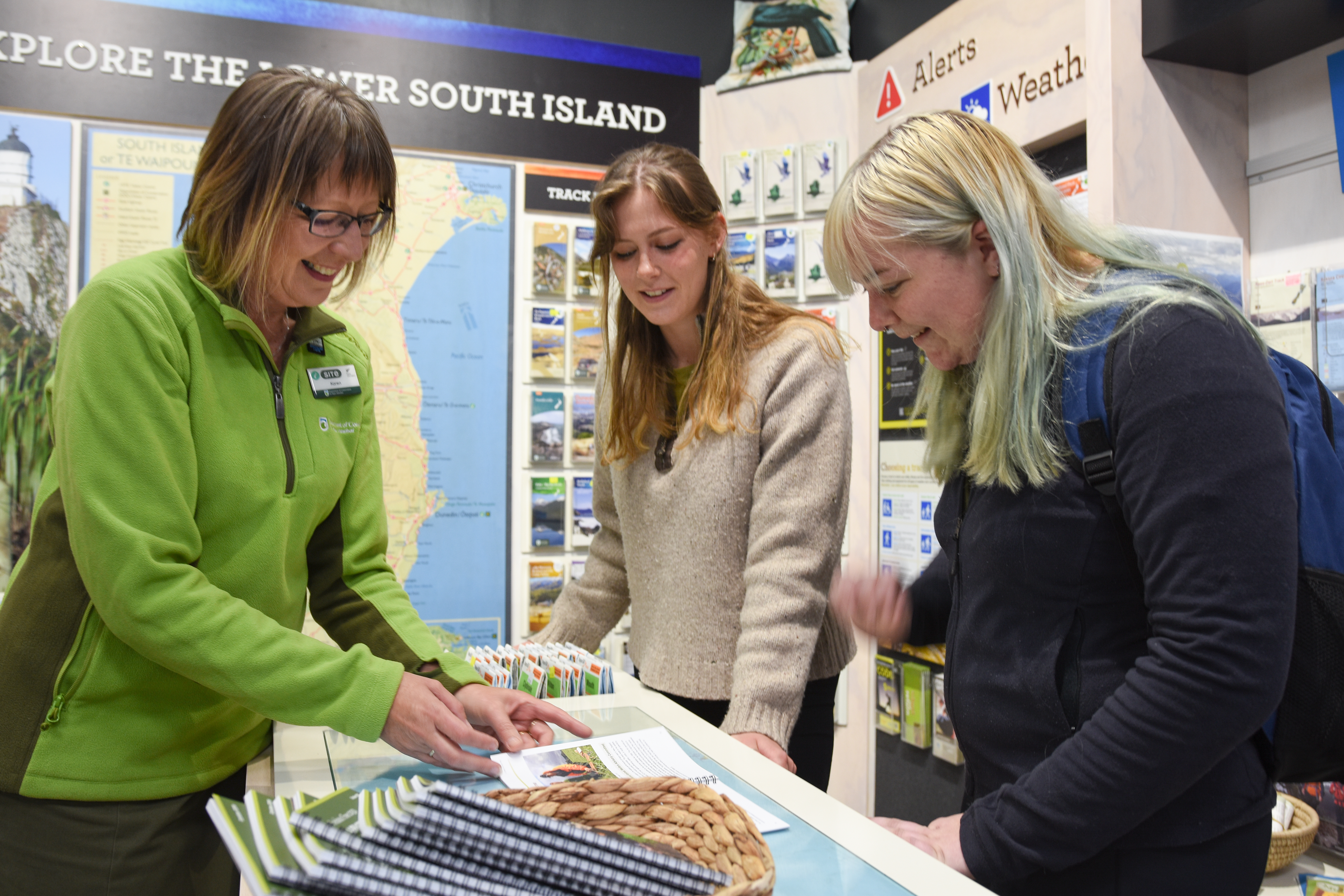
Where to go to be in the know
Our Visitor Centre’s are popular fixtures in and around our national parks and gateways to our special places. They have a significant role providing advice around planning your adventures and keeping you safe in the outdoors. Yet Visitor Centres are so much more than that.

They can help with hunting permits, booking huts, information on natural history, ecology and cultural stories at place. Questions like “is there a reason great spotted kiwis are so big?” to “where can I buy feijoa jam and lamb gravy?” can really test how well our rangers can pivot – they get it all!
Visitor centres are incredibly valuable because you can get bespoke advice from a knowledgeable ranger, who knows their local area well. And they try their upmost to provide the best customer service and are always looking at new ways they can seize the moment to educate for nature.

Stepping up for nature
One type of enquiry they receive is around how people can do their part for our taonga species. People are arriving at our visitor centres, inspired by their surroundings and have made a decision to take action for nature in their own backyards. It’s amazing how our beautiful spaces really make us evaluate what is important to us. It is this part that got Jacob Fleming (DOC Product Coordinator) thinking. How do we capitalise on the public’s desire to do the right thing, right when they’ve made the decision to do it?
One action New Zealanders can take is joining the Predator Free 2050 movement. This can be as simple as a trap in your backyard or spreading the good word. Visitor Centres regularly stock the FREE Practical Guide to Trapping, and thousands have been given out to New Zealanders up and down the motu. But what if you’re ready to get your trap now?
Jacob reached out to Goodnature, to collaborate on how we can get mouse, rat and mustelid traps into our visitor centres. “It seems like a natural retail offering. If we talk to people about our biodiversity crisis, then we should be able to provide them with ways they can help”. People are often travelling as they come through our national parks, so are reluctant to purchasing a large trap like a DOC200, “but the Goodnature A24 traps and mousetrap are portable and can be used in their backyards when they get home”. What a great memento.

Where can you get your trap
So far, Nelson Lakes, Arthurs Pass and Whakatipu-wai-Māori/Queenstown have started stocking the new Goodnature traps, with the other visitor centres to follow. But many other centres already stock other varieties of traps, and plenty of other products that also allow you to get out and be a nature warrior.
Next time you’re out appreciating our beautiful outdoors, pop into our visitor centres and ask the ranger how you can restore and protect your slice of heaven – we know they’ll have a few options up their sleeve for you.



It’s great to see Visitor Centres recognized as conservation hubs rather than just logistical stops. That personal touch from rangers can turn a simple hike into a deeper connection with place and nature.
I really like how you highlighted the role of rangers in answering everything from ecological questions to quirky local curiosities — it shows how visitor centres are more than just a stop for directions. It’s also great to see them positioned as a way to spark conservation action at home, because that connection between personal experiences in nature and everyday choices is so powerful.