


By Andie Gentle
Te tuku iho o Lisa – ke kākāpō, he tupuna –
The legacy of Lisa – a kākāpō, an ancestor
Lisa the kākāpō lived more than half a century and was one of the kākāpō we knew the longest. She passed away earlier this year on Pukenui Anchor Island, showing signs of old age. Her death brought the kākāpō tally to 238. Lisa’s stories span decades of conservation mahi, helping bring her species back from the brink of extinction.
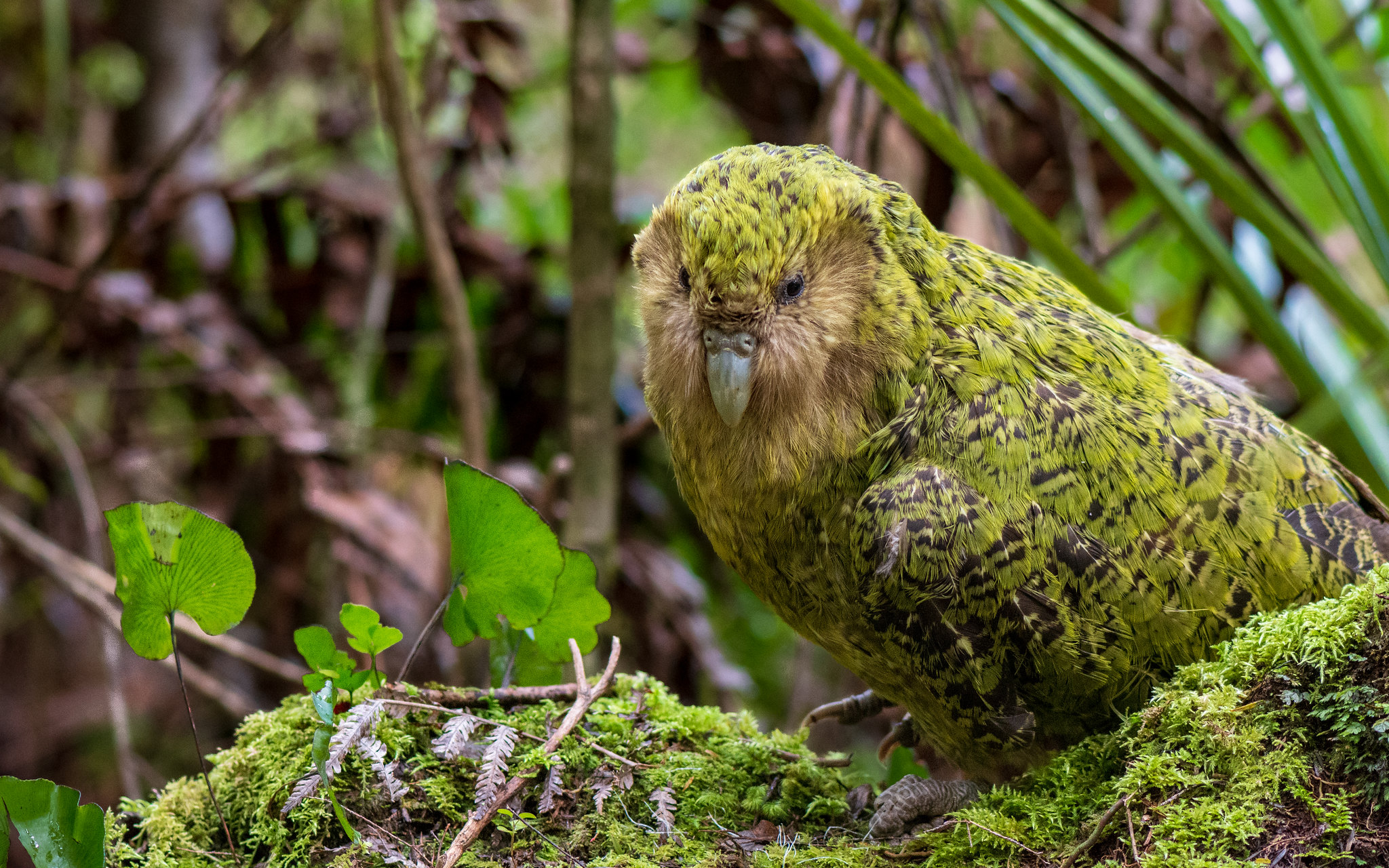
Lisa’s discovery
Lisa was one of the founders of the modern kākāpō population. She was discovered on Rakiura/Stewart Island in 1982 by Bill Jarvie and his dog Adler. At the time, there were just 29 known kākāpō, and females had only been confirmed to still exist two years earlier.
Her exact age was unknown, but based on breeding history and genetics, we know she was at least 50 years old when she died, likely much older. It’s estimated that kākāpō could live anywhere between 60–90 years – only time will tell.

Moved then missing
Due to the high risk of feral cat predation on Rakiura, Lisa was moved to Te Hauturu-o-Toi/Little Barrier Island (Hauturu) for protection. In 1986, her transmitter was removed as part of a trial to see if reduced human interaction might improve breeding outcomes. This was later found to make no difference, and today all kākāpō wear transmitters for management purposes.
By 1999, all known females had been removed from Hauturu. So, when signs of mating were spotted in the bowl belonging to the male Ox, conservation dogs were brought in to help search. Then, 13 years since she had last been seen, Lisa was found. Even better, she was on a nest with three fertile eggs.
The kākāpō population had grown to a total of 63 by then, thanks largely to more discoveries on Rakiura. Lisa, and the three females from her ‘rediscovery nest’, were moved South to help diversify the more successful breeding populations. Lisa lived first on Maud Island (1999-2001), then on Whenua Hou/Codfish Island.
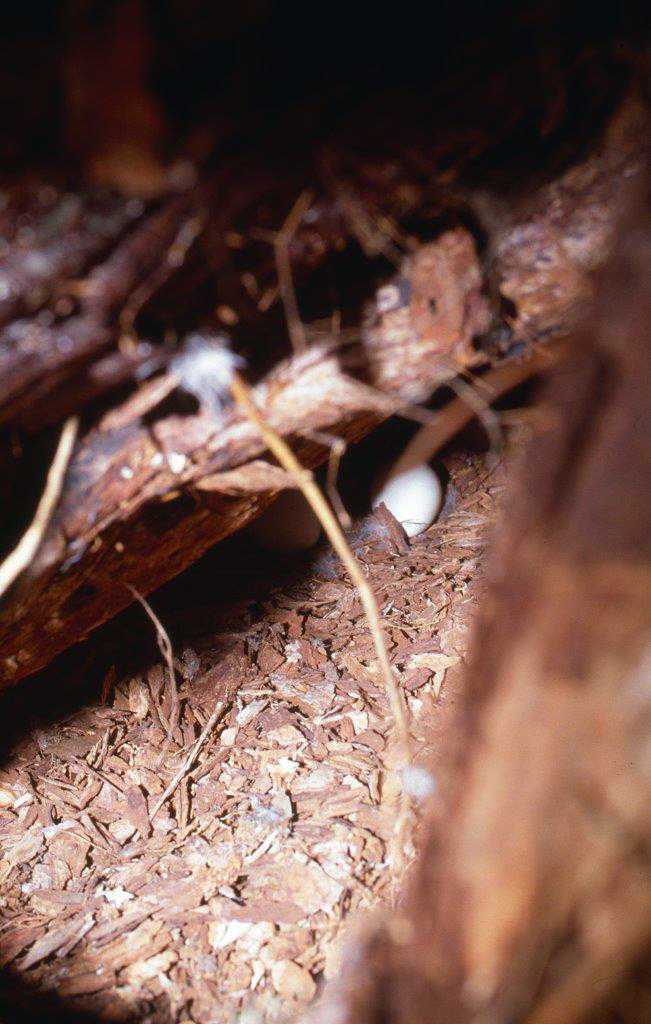

The Te Hauturu-o-Toi site trial
By 2012, the population had reached 125. A new trial began again up on Hauturu, which was now free of kiore (Pacific/Polynesian rats), to see if kākāpō could breed there without our support. So, after 13 years (and six breeding seasons) on Whenua Hou, Lisa was selected to return north to join the trial in 2014. Remarkably, within a couple of weeks, she had found and settled into her home range – the same one she’d last used 15 years earlier.
Lisa was part of the Hauturu trial for a further nine years until it wrapped up in 2023. The trial taught us many things, including that kākāpō are unlikely to be productive on the island without supplementary feeding.
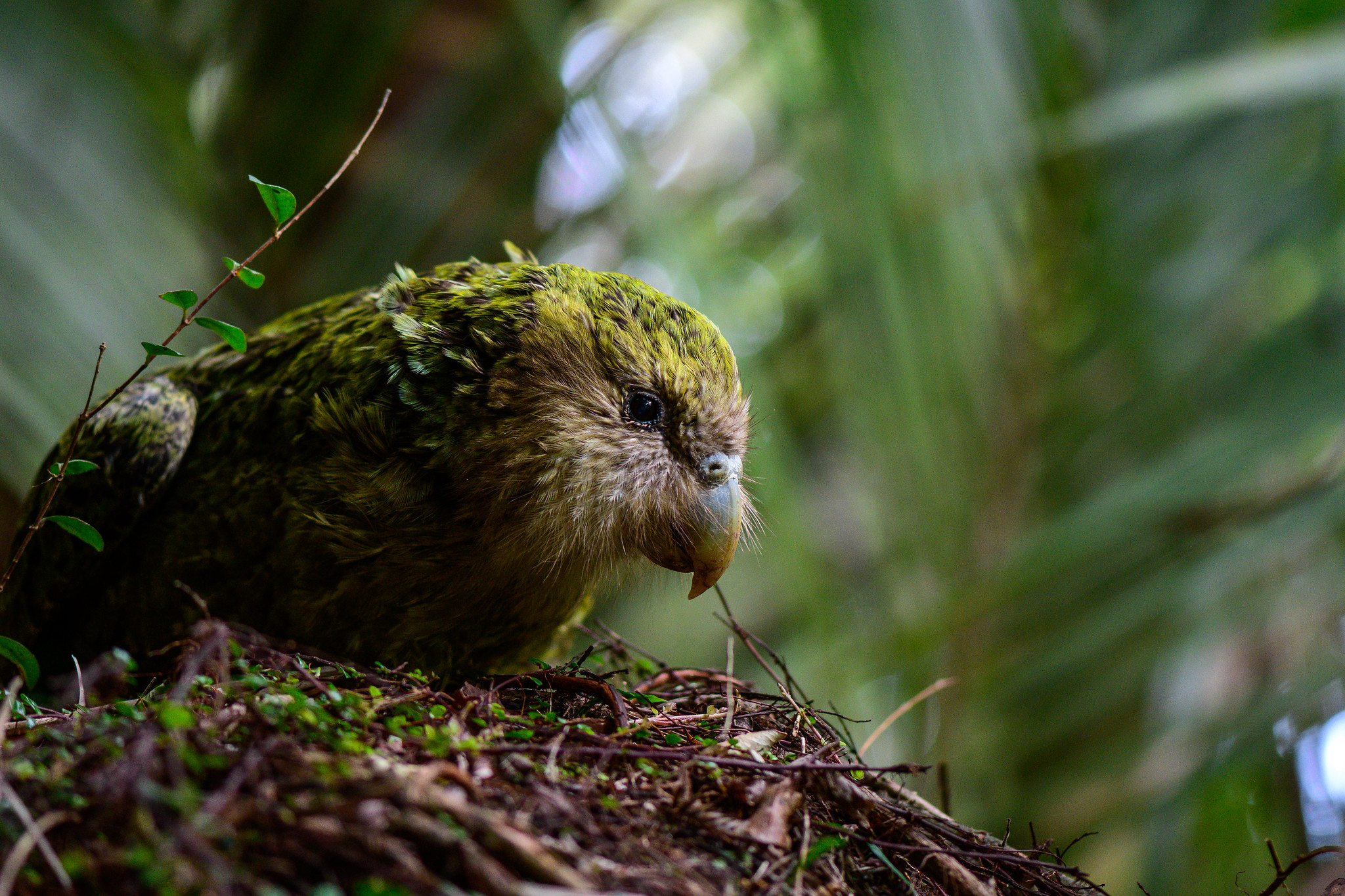
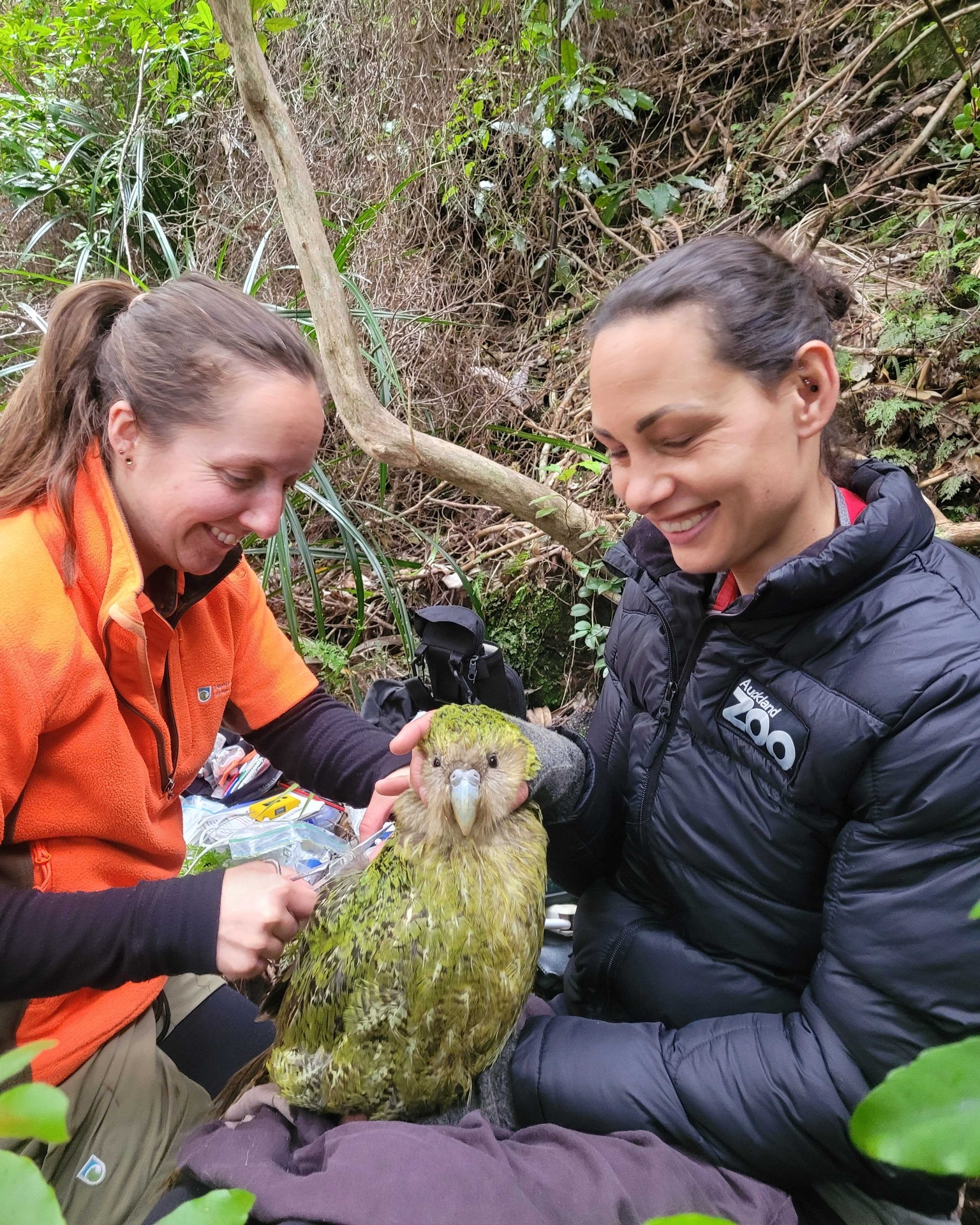
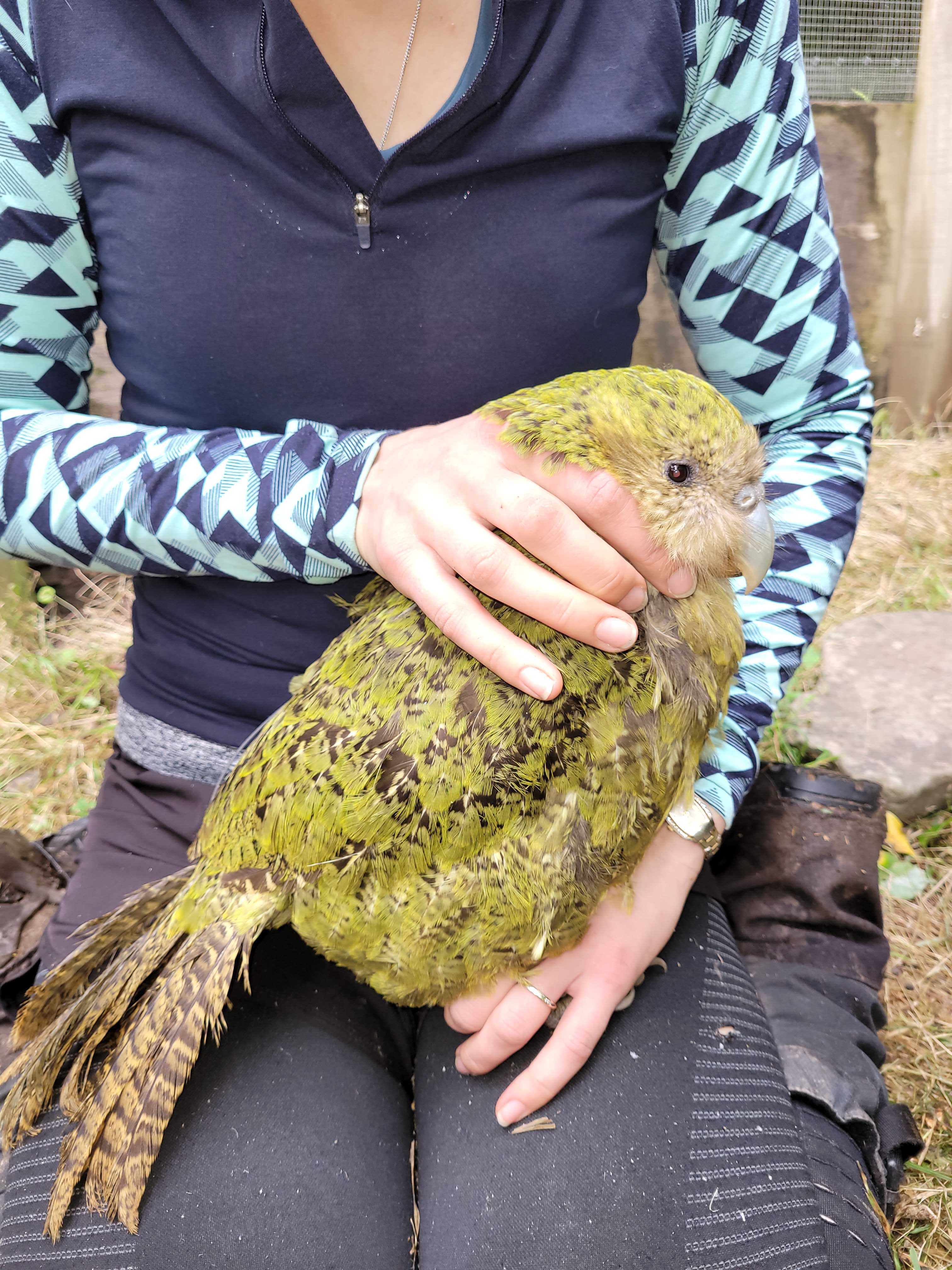
Images 2 & 3: Lisa during transmitter and health checks on Hauturu with Rangers Bryony and Jasmine – 2022 (2) & 2023 (3) | DOC
Breeding results
Incredibly, Lisa had offspring across more than three decades.
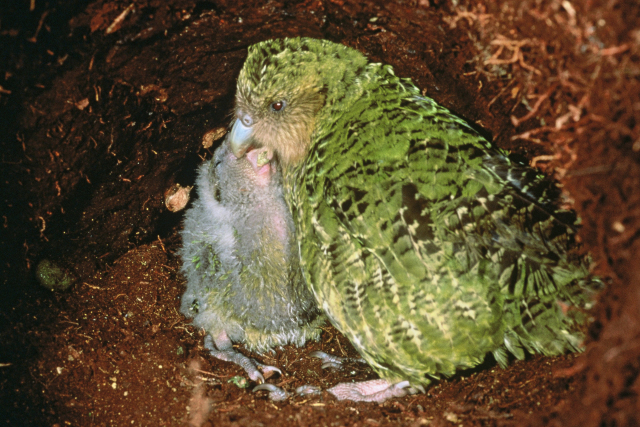
Kākāpō breed just once every 2-4 years and in the time, we knew Lisa she had 11 clutches and 28 eggs (16 fertile, 10 hatched). DNA also revealed she had at least two offspring before she was first discovered in 1982. Her last clutch was on Hauturu in 2021 with two infertile eggs.
Eight of Lisa’s 12 offspring are alive and well today:
Discovered on Rakiura: Merty* (1982) Ralph (1987)
Hauturu: Ellie*, Hauturu & Aranga (1999)
Whenua Hou: Hananui (2002), Lisa1-2-08* (2008) Purity*, Tīwhiri & Hurihuri (2009), Atareta (2011), Ruapuke (2014)
*deceased
In 2014 during her last breeding season on Whenua Hou, Lisa accidentally cracked her egg in the nest. It was severely damaged, and its survival was uncertain. Every effort was made to save it. The egg was carefully taped, glued, and hand-rotated hourly for five days. Incredibly, Ruapuke (then known as Lisa-One) hatched safe and well, becoming the standout success of a breeding season that produced just five other chicks. Ruapuke is now a healthy strong 11-year-old.

Lisa’s Legacy
Lisa’s role as a founder and her contribution to critical data and insights for kākāpō were invaluable. She helped shape the future of her species and can now rest easy knowing her offspring and many mokopuna (descendants) will carry her legacy forward into the 2026 breeding season and beyond.
The Kākāpō Recovery Programme works together with treaty partner Ngāi Tahu and national partner Meridian Energy to help restore the mauri (life force) of this critically endangered species. To support our mahi visit: Donate: Kākāpō Recovery
Want to read more? Learn more about the Hauturu trial or the upcoming breeding season.
Symbolic kākāpō adoptions are a special way to support the conservation of this taonga species. You can adopt a kākāpō for yourself or as a meaningful gift. Postage packs with soft toy kākāpō available until 25 November 2025.


I will miss hearing about the life of Lisa in this world, but as she passes over the bridge to the next world, I am overwhelmed with joy to celebrate her legacy. I first saw her on the BBC documentary with Stephen Fry and Mark Carwardine, “Last Chance to See…” At that time, Kakapo numbers where below 100 birds. We were thrilled to see the brief glimpse of Lisa sitting on the first precious egg of the season. As I recall, it was a landmark season. Her life brings one a feeling of hope for all creatures struggling in this world. My thoughts will always be with her and her descendents.
Hi, I’m Grace and I have beautiful arms of creativity.
Thank god for you people and your dedication. I am in UK. I adore kakapo!! Love reading about them. I would love to come to NZ and help out for a while!! Keep up your fabulous work work. Love to all you gorgeous kakapo!!! Xxxx
Carol miller-Richards
Thank you for this wonderful history of this very special Kakapo.
I’m in England and have only seen sas stuffed kakapo in Victorian glass cases. I marvel at your work and am always thrilled to read about the progress you are making. This is an amazing story. An unwitting animal hero!
A wonderful article! What an amazing life & legacy ♥️
I’m impressed by how many moves Lisa had, more travel than many humans.
Thanks for the great post about Lisa.
My wife – Lisa – and I adopted her a few years ago because we had to given her name.
What a great survivor and contributor to the well-being of the rest of the Kākāpō family.
Rest in Peace Lisa
Love from Roger and Lisa
This is just so wonderful to read, and completely heartwarming ! Kia ora.