Spring is here with longer days and the promise of warmer temperatures. But with many of us taking a winter hiatus, NZ Mountain Safety Council (MSC) has some essential advice for easing back into more adventurous hikes and tramps.

Watch the weather
Spring weather is notoriously unpredictable, particularly in our national parks and backcountry. Storms are still sweeping across the motu, bringing freezing temperatures, cold winds, heavy rain and snowfall below the bush line. When planning a trip, keep a close eye on the weather forecast and warnings. If the weather isn’t suitable, alter your plans or postpone your trip.
When you’re on the track, keep an eye on the weather. Conditions deteriorate quickly in spring, and you may need to shorten your trip, turn around or spend an extra night out. Remember, it’s never too late to change your plans.

Pack for all conditions
Essential springtime gear includes warm layers, a quality rain jacket, a warm hat and gloves as well as sun protection.
Get out your gear well before your trip to check it’s in good condition, especially if it’s been sitting idle over winter. A gear check now can prevent unexpected blowouts while you’re on the track.
See what needs repairing or replacing, charge or change your batteries and consider waterproofing your wet weather gear if it hasn’t been done for a while. If you have new boots, wear them in on short walks close to home to ensure they’re comfortable and not going to give you blisters.
Emergency situations can happen at any time in the outdoors. Always pack an emergency shelter, extra food, a torch and an emergency communications device.

Plan My Walk has customisable gear lists to ensure you don’t leave essentials behind.
Build your fitness slowly
Have an honest conversation with yourself about your fitness. If you’ve taken a break over winter, easing into it will help you build your fitness slowly, shake off any cobwebs and prevent the risk of injury by overextending yourself.
When choosing trips, also consider everyone’s abilities, and opt for day walks or easy overnight tramps within everyone’s capabilities. These will be far more enjoyable than an overly ambitious trip.

Plan ahead for stream and river crossings
Spring brings snowmelt and more rain, so rivers will be running higher than usual. After heavy rain, what was a dry streambed or tame river could become a life-threatening hazard in minutes. If you don’t have river crossing skills, stick to tracks with bridges.
Knowing when a stream or river is unsafe to cross is the first step in river safety. Take time to check for these signs and discuss them as a group:
- Too fast?
- Too murky?
- Too messy?
- Too loud?
If a river is moving faster than walking pace, is dirty and discoloured, is noisy or carrying debris like tree branches, it’s unsafe to cross. If in doubt, stay out – no destination is worth the risk of an unsafe river crossing.
If a stream or river is not safe to cross:
- Wait for it to drop. Pitch your emergency shelter and make yourself comfortable.
- Use your plan B. This may mean turning back or taking an alternate track that avoids the crossing.
- Tell your emergency contact about your change of plans as soon as you can.
MSC’s website has more essential river crossing tips to help you prepare effectively and cross a river safely.
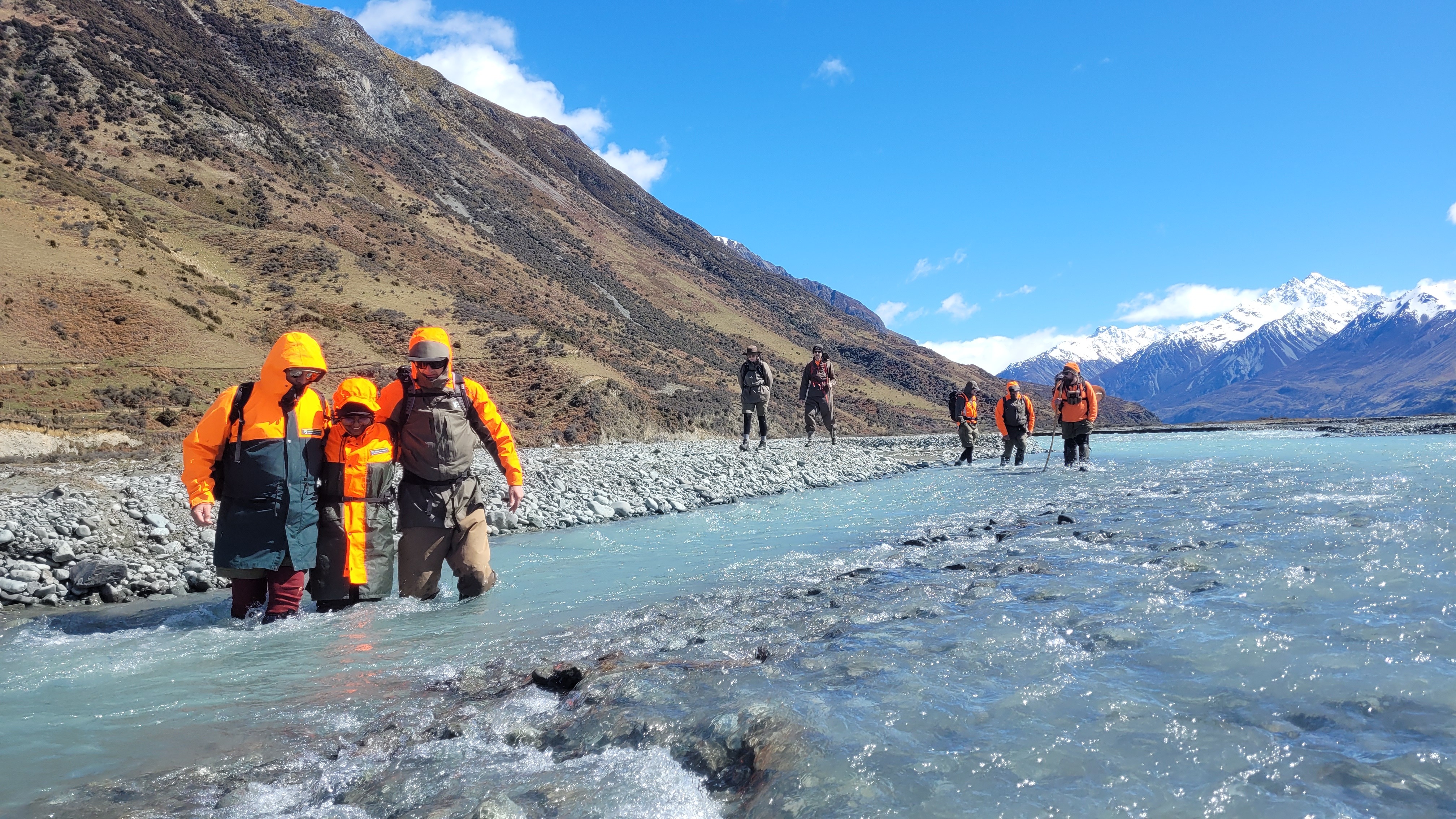
River safety training day – Rangitata River Earl, Brittany
Be aware of avalanches to the valley floor
Milder spring temperatures and rain, rather than snow, can create large avalanches that run further down the mountain in spring. These can be even bigger than those in winter. That means if you’re tramping through valleys, gullies or stream beds, you could be exposed to avalanches.
To reduce your exposure, follow these simple guidelines.
- Start early: Aim to be well clear of steep, snowy terrain before the heat of the day.
- Delay your trip after a storm: Wait a day or two before heading out to give the snowpack time to stabilise and allow any natural avalanches to occur.
- Avoid steep slopes: Don’t stop or camp in gullies, by small side streams, under cliff bands or in clearings below steep snowy slopes.

Check for track alerts
Spring storms can damage tracks and access roads. Check for track alerts before you leave to ensure tracks are still accessible. These are also available on Plan My Walk.
It can take time for damage to be reported. If you are the first to come across damage to tracks or infrastructure, like bridges, report any concerns to DOC as soon as possible and leave a track review in Plan My Walk to help inform others of the latest conditions.