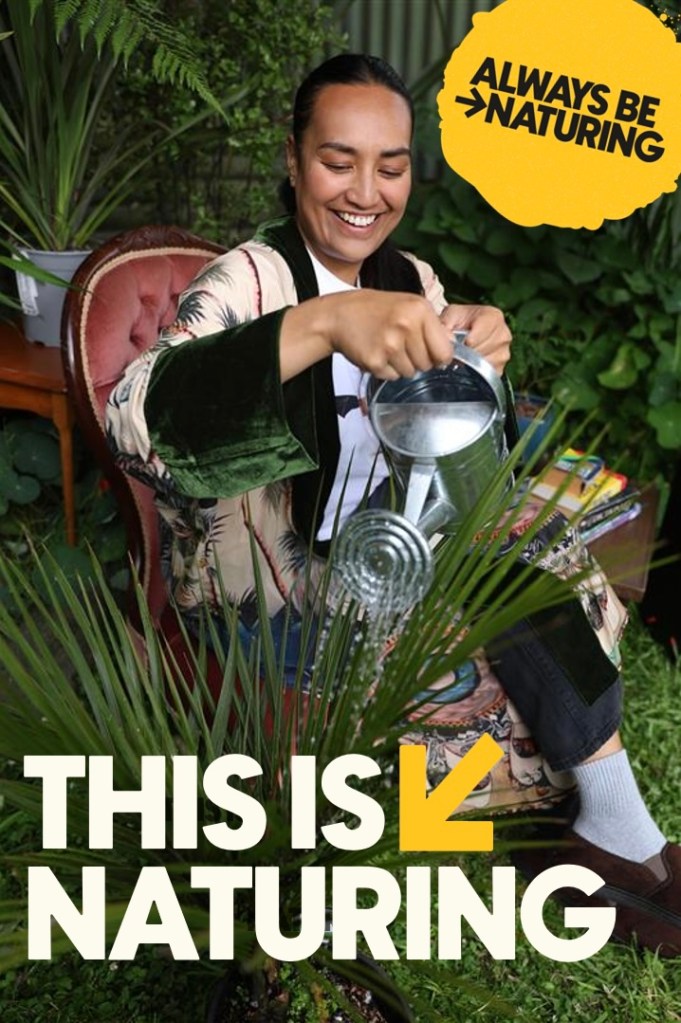
Every Monday Jobs at DOC will take you behind the scenes and into the jobs, the challenges, the highlights, and the personalities of the people who work at the Department of Conservation.

This week we look at DOC’s sustainability team:

Helen Ough Dealy

Helen Ough Dealy: Sustainability Advisor (part-time)

Kirsten Haupt: Sustainability Project Facilitator

Peter Noble: Manager, National Shared Services

At work

What kind of things do you do in your roles? 

Kirsten Haupt

Helen: I am DOC’s very own Babel Fish. I translate then link sustainability information to DOC staff and vice versa.

Kirsten: Providing project management support for renewable installations, particularly on DOC islands – dealing with the paperwork while the local guys get on with the job. 

What is the best part about your job?

Helen: Connecting people with the information/resources they need to do their job more sustainably.

Peter Noble

Kirsten: Helping to upgrade old infrastructure on DOC islands (and reducing maintenance costs) and increasing their resilience to future fuel increases – leaving them better off in the long run. 

What is the hardest part about your job?

Helen: Keeping up with the continually changing and developing nature of sustainability.

Kirsten: Juggling several large projects while keeping up with all the other sustainability things that come my way. 

What led you to your role in DOC?

Helen: I put my hand up and said, “Pick me!”

Kirsten: Right place, right time and a willingness to take on a challenge.

Kirsten with Rene Duindam and Erica Doust promoting DOC's National Office Work Place Travel Plan

What was the highlight of your month just gone?

Helen: Seeing the intranet frontpage story, about the installation of skylights in various DOC buildings across the country, go live and to receive a comment about it in Maori, which I understood!

Kirsten: Two things – having the contract for the Great Barrier Island renewable system signed and releasing the request for tender document for the Raoul renewable system. 

The rule of 3… 

Three loves

  1. People who care and use commonsense (Kirsten)
  2. People who recycle (Helen)
  3. People taking public transport (Peter)

Three pet peeves

  1. People who just don’t care (Kirsten)
  2. People who don’t recycle (Helen)
  3. People driving large cars (Peter)

Three foods

  1. Anything homegrown really, and cheese (Kirsten)
  2. Carrots grown in the Russell Community Gardens (Helen)
  3. Potatoes from the Community Garden at the bottom of our section (Peter)

Three favourite places in New Zealand

  1. The bush: Dirt underfoot, trees above, birds around, and a cosy hut waiting at the end of the day (Kirsten)
  2. The Strand, Russell, Bay of Islands (Helen)
  3. Playing with my kids in our community garden – just magic (Peter)

Favourite movie, album, book

If Helen could be one of NZ's native species for a day she would be a North Island weka

Movie

Peter: Movie: Chariots of Fire – I love the 100m running scene near the end.

Kirsten: I can’t choose just one. I love movies and the places they take me (the reason why I can’t watch horrors and really stupid entertainment). I do like my Sci-fi. 

Album

Kirsten: Again, difficult to pick one. I think I see music like a soundtrack to life – there is always the right song for the right situation.

Book

Peter: Not really one, but I love my Kindle e-reader. 

Deep and meaningful… 

What piece of advice would you tell your 18 year old self?

Helen: Keep asking questions and never assume something can’t be done. The only sure thing is that if you don’t ask, you don’t get.

If Peter could be one of NZ's native species for a day he would be a kakapo

Peter: TINA: There Is No Alternative – if people say that they are generally wrong.

Kirsten: The world is your oyster – discover what YOU really want and just do it.

Who or what inspires you and why?

Helen: Kathryn Maxwell (ex-Sustainability Manager, DOC) who wouldn’t accept ‘No’, or ‘It can’t be done.’

Kirsten: Certainly the above and people who know what they want and just get on and do it.  

When you were a kid, what did you want to be when you grew up?

Peter: A bus driver, I still may do that one day.

Kirsten: Be able to talk to animals.

And now, if you weren’t working at DOC, what would you want to be?

If Kirsten could be one of NZ's native species for a day she would be a little blue penuin

Helen: A conservation volunteer.

Peter: Stay-home dad looking after our kids… or the Prime Minister.

Kirsten: Running a little farm, making chutneys, jams, bread and cheese.

If you could be any New Zealand native species for a day, what would you be and why?

Helen: The North Island weka – cheeky, inquisitive, determined, a survivor – just like DOC.

Peter: Kakapo – A project team I worked with recently gave me the nickname “Kakapo”, so it seems appropriate.

Kirsten: Little blue penguin – simply adorable, but possessing ninja powers.

Every Monday Jobs at DOC will take you behind the scenes and into the jobs, the challenges, the highlights, and the personalities of the people who work at the Department of Conservation.

This week we look at Community Relations Officer, Claudia Babirat:

Claudia with her favourite toy

At work…

Name: Claudia Babirat.

Job: Working in media and communications for Otago Conservancy (officially, a Community Relations Officer).

What kind of things do you do in your role?

I tell stories—through TV, magazines, the paper, our Otago newsletter ‘Good as Gold’ and web publishing.

Heading up to Macetown with the TV3 news crew

What is the best part about your job?

I’ve just made a series of short documentary films about various DOC and community conservation work. The films include: the Kiwi Ranger scheme, a new community-led initiative called Project Gold (that encourages people to plant kowhai), Grand and Otago skinks, working with concessionaires, a hut warden who’s volunteered at Aspiring Hut for the past 17 years (!) and more…

Aside from making films… I love the fact that I learn something new every day. Also the people—DOC staff are some of the nicest people I’ve ever had the pleasure of working with.

What is the hardest part about your job?

Persuading people that their stories are worth telling.

What led you to your role in DOC?

Disillusionment by the fact that most of the wildlife docos I used to work on were shot overseas. I want to tell stories about the cool things we have right here in our own backyard.

What was your highlight from the month just gone?

I premiered three of my short DOC films the other day at lunch and people laughed in all the right places. That made me happy.

The rule of three…

Three loves

  1. Adventure travel
  2. Being a hunter-gatherer
  3. Underdogs like Peripatus, Boeckella dilatata and longfin eels (they are cool)

Claudia and Pete on their 7 month trip around Australia

Three pet peeves

  1. People who say ‘you are so lucky’
  2. Squishy white bread
  3. Being late for anything

The secret paua spot!

Three foods

  1. Crusty German bun with Fleischsalat (a type of luncheon mixed with gherkins and creamy sauce, yum)
  2. Tom yum goong
  3. 500lb steak on a campfire grill after forgetting to eat all day, washed down with a beer

Three favourite places in New Zealand

  1. My house in Broad Bay on a rainy day with the fire roaring.
  2. On a tube drifting down the Wakamarina River from Pinedale Motorcamp to the family farm.
  3. Low tide at Mussel Point at Hannah’s Clearing on the West Coast to collect dinner.

Claudia and her CT110 on Fraser Island, Australia

Favourite movie, album, book

  1. Movie: Microcosmos
  2. Album: The Witches of Eastwick (it’s a musical)
  3. Book: My Family and Other Animals by Gerald Durrell — two years ago I went to Corfu to track down some of the places and critters that Gerald Durrell wrote about.

Deep and meaningful…

What piece of advice would you tell your 18 year old self?

See the world as much as you can before you’re expected to be a grownup. Failing that—just don’t grow up!

Tramping with Pete and the kids along the West Coast

Who or what inspires you and why?

Everything, but my Mum is pretty special.

Mistletoe monitoring (or lessons on how to be a monkey) with Graeme Loh

When you were a kid, what did you want to be when you grew up?

A cartoon artist.

And now, if you weren’t working at DOC, what would you want to be?

I don’t know, I kind of like it here. Having said that, I’m just about to go on leave to shoot a documentary on Macquarie Island for four months.

If you could be any New Zealand native species for a day, what would you be and why?

New Zealand falcon, they literally see the world from a different perspective.

By Laura Boren, Senior Technical Support Officer – Marine Mammals, Department of Conservation

Every winter there will be a few young NZ fur seals who find themselves in interesting places, often to the surprise and amusement of the people who stumble across them.

It’s a common occurrence – they are just coming ashore to rest and will move on in their own time.

This fur seal pup found a cosy position by a spa pool in the Marlborough Sounds community of Anakiwa. The exciting thing for me was that the spa pool belonged to friends of my family. So, on a Sunday afternoon I received an excited phone call from the Biggs family asking me what they should do.

Seal pup relaxing by the spa

“If it’s not interfering with anything just leave it,” I said.

“Enjoy it while it’s there – just give it some space because at this time of the year it might not be in great condition and will want to rest.

“It’ll leave when it’s ready,” I assured them.

Later that day I had an equally excited phone call from my parents. My father had been to see the seal pup and had taken several photos. From the photos we could confirm that it was one of this year’s pups, and was likely to have weaned early – seal pups usually wean around 10 months of age, but this one would only be about 7 months old.

So, the pup hung around for the afternoon, resting next to the warm spa pool and, just as suspected, the following morning was gone.

Read ‘Seal drops in for a spa’ story on www.stuff.co.nz

Watch a video on the DOC website about how the NZ fur seal is making a return from the brink of extinction

The competition to win a limited edition copy of Wild Creations artists Rosy Tin Teacaddy’s new album All Mountains are Men is closed.

Jack van Hal, from Hillsborough in Christchurch, is our winner. Congratulations!

The challenge was to name the two New Zealand native birds featured in Bucketful of Bones and Beauty My Dear. The correct answers are:

_______________________

Rosy Tin Teacaddy’s album All Mountains are Men is a national treasure, and we have a numbered limited edition CD to give away.

Wellington folk duo Rosy Tin Teacaddy

But more on that later. First I’ll try to explain why I’m sounding like such a tragic fanboy.

It’s partly a pride thing. The whole album was written and recorded in an isolated DOC cottage beside Lake Tarawera while the ’Caddies were on a Wild Creations artists’ residency so, in some small and frankly delusory way, I feel I contributed. And the whole Bon Iver, lonely-cabin-in-the-woods vibe doesn’t hurt.

Then there’s the way New Zealand past and present seems to have been captured in miniature in the songs. Released on the 125th anniversary of the eruption of Mt Tarawera, the record rings with echoes of the explosion that buried Te Wairoa and engulfed the Pink and White Terraces, the “Eighth Wonder of the World”.

The album was written and recorded at Lake Tarawera

Lake and mountain flirt shamelessly, the local telegraph master stays at his post to report the disaster as ash rains down and dead men turn up at their own funerals.

None of this would mean diddly if the songs hadn’t lodged themselves in my subconscious ever since a colleague played me the demos.

Apart from the title track, the songs I keep coming back to are a lament to the lost Pink and White Terraces called Beauty, My Dear, domestic-scene-with-disaster Out of the Frying Pan into Fire, and Telegrams and Ashes, which documents the eruption in staccato telegraphese.

The songs are mysterious and evocative, mythic and everyday, funny and sad, richly melodic and wrapped in beautiful harmonies. What Gillian Welch and David Rawlings do for Americana, RTT do for New Zealand’s songwriting traditions.

But don’t take my word for it.

Check out All Mountains are Men on Bandcamp.

Cover of Rosy Tin Teacaddy album All Mountains are Men

All Mountains are Men CD

Mustelid detective hound, Crete, and handler Scott Theobold, will be back on Kapiti Island this week. For the next half a year they’ll be there regularly, for up to a week at a time, to scope the joint for any more signs of stoat action. 

Kapiti Island and the Marine Reserve, as seen from the lookout Paekakariki Hill.

I myself, being an urban DOC-ette, have only seen a stoat once – it ran across the road in front of the family car on a Fiordland camping holiday. But I didn’t like the look of its face and am thrilled that, so far, no more signs of his kin have been found on Kapiti.  Have any of you guys seen stoats in the wild before?  

As for the famous stoat caught on Kapiti last year: We’ve found some scat since his capture, but DNA analysis has shown up inconclusive – we don’t know if it’s from our original guy or a  different one. We’ll have to wait and see whether Scott and Crete track down anything more on their future visits. 

Hamish Farrell with the dead stoat he found on Kapiti Island

So, while  all  may seem quiet on the stoat front at present, bio-security work continues. Along with checking traps and tracking tunnels every fortnight, and sniffer dogs and handlers doing their thing, there’s also track maintenance happening all over the island.

North Island Kaka, Kapiti Island

So, thanks to all involved in the work on Kapiti Island. Providing a threat free sanctuary for our treasured wildlife is wonderful – but it isn’t easy.