Archives For 30/11/1999

Come behind the scenes and into the jobs, the challenges, the highlights, and the personalities of the people who work at the Department of Conservation (DOC).

Today we profile Intranet Communications Advisor Tina Clouston.

Walking the ‘Narrows’ in Zion National Park, USA –
the walk is mostly through the river

At work…

What kind of things do you do in your role?

I spend a decent amount of time looking after the day-to-day running of the intranet—reviewing content, training, testing new features, publishing content, supporting our content editors (all 70+ of them), improving usability etc etc. With over 11,000 pages on the intranet it keeps me busy! And it means that I’m never entirely sure how my day is going to pan out…

And then we’ve got a number of projects on the go (fun website/intranet stuff) like trialling the ‘like’ feature, which we’ve added to our front page stories this week.

It’s a great job.

What is the best part about your job?

Hmmmm… a few things actually:

  • Discovering all the interesting things that everyone does. I get to see a slice of it via the intranet content that we review.
  • Deleting old content off the intranet. I know, it’s a bit geeky, but there is nothing like getting rid of old stuff!
  • Investigating ways to make the intranet better.

What is the hardest part about your job?
 
Last minute requests!

What led you to your role in DOC?
 
I’ve been working on websites and intranets for a while now in a number of different industries. My last role, based in London, was working for an Asset Management Company—content that was all about shares and trading and making money—not the most inspirational stuff. After five years of that and a hankering to head home, I decided I needed to work somewhere I actually wanted to work. And so I applied for the job and here I am.

What was your highlight from the month just gone?

I was lucky enough to attend Te Pukenga Atawhai, which was a fantastic experience. I met loads of wonderful people and had a generally great time.

Dog-sledding in Norway

The rule of three…

Three loves

  1. A crisp, clear winter’s day.
  2. Travelling – love it! Living in London was the perfect base for seeing the world and I’ve also been lucky enough to live in the States, and have spent a number of months in Japan.
  3. www.etsy.com. So much crafty goodness.

Three pet peeves

  1. People texting at dinner or during meetings. Really – can it not wait?
  2. Missing the train (yes, I know it’s my own fault).
  3. Littering.

Three foods

  1. Gingernut ice-cream.
  2. A good ol’ fashioned roast.
  3. Wellington coffee.

Three favourite places in New Zealand

  1. Wellington. Aside from having a great vibe, it’s my home.
  2. Tongariro National Park.
  3. My grandmother’s old home at Himitangi beach.

Favourite movie, album, book

  1. Movie: The Goonies – classic 80s movie. Sloth is awesome.
  2. Album: August and Everything After by Counting Crows. Always reminds me of road tripping in America.
  3. Book: The Help – wonderful, warm characters.

On an ice covered beach in Iceland

Deep and meaningful…

What piece of advice would you tell your 18 year old self?

Don’t worry so much.

Who or what inspires you and why?

Brian Cox. He’s been making science cool in the UK. Though he failed maths at school, he’s since played keyboard in a rock band, works on the ATLAS experiment at the Large Hadron Collider at CERN, Switzerland and has been making BBC documentaries about the Universe.

When you were a kid, what did you want to be when you grew up?

An astronaut.

And now, if you weren’t working at DOC, what would you want to be?

A photographer for National Geographic. Might need a few photography lessons first….

Tramping the Milford Track, January 2012

What sustainability tip would you like to pass on?

Say no to plastic bags.

Which green behaviour would you like to adopt this year—at home? At work?

Compost.

If you could be any New Zealand native species for a day, what would you be and why?

A morepork. Why? They have fantastic hearing, can see in the dark and can turn their heads 270 degrees.

What piece of advice or message would you want to give to New Zealanders when it comes to conservation?

Take good care of our country –  it’s going to be here a lot longer than us.

Come behind the scenes and into the jobs, the challenges, the highlights, and the personalities of the people who work at the Department of Conservation (DOC).

Today we profile Deputy Director-General Business Services Group, Grant Baker.

Me on the Tongariro Crossing with the Emerald lakes in the background

At work…

Name: Grant Baker.

Position:Deputy Director-General, Business Services Group (BSG).

What kind of things do you do in your role?

I provide leadership and guidance to my managers to ensure that BSG provides the high level of support and service required for DOC to meet its obligations. This includes ensuring we have the funding to continue to balance our budgets now and in the future and that all our systems operate and are supported so that staff can do their work.

I support Al is his role as Director-General, and my Deputy Director-General colleagues in their work, and make sure that work is fun and enjoyable—not always the easiest thing to do.

What is the best part about your job?

He tangata, he tangata, he tangata; you, our people, are extremely good at what you do. And visiting people and places across DOC, which is a key part of my job. 

What is the hardest part about your job?

Going into bat for conservation with central agencies and convincing them of the benefit that conservation makes to the economy and to the wellbeing of all New Zealanders.

What led you to your role in DOC?

My first career was in broadcasting engineering as a radio technician at 2ZW Wanganui, and then into management at an early age in Radio and Television engineering. In the late 1990s, after 27 years in broadcasting, it was time to try something new, and the opportunity arose to join DOC as one of the three Regional General Managers as part of the re-structuring of DOC post Cave Creek. One could say I haven’t looked back since. 

What was your highlight from the month just gone?

It’s always great to get to the end of another (financial) year, have the new Statement of Intent signed off by Cabinet and in place, know that we have come in within last year’s budget, have balanced the budget for the years ahead, and have delivered on all of our work in the year just completed. 

On the Abel Tasman track near Torrent Bay

The rule of three…

Three loves

  1. Family. I’m married to Margaret, with four sons and four grandchildren around the world.
  2. Playing cricket and golf. I’ve played cricket in most of the playing continents of the world—New Zealand, Australia, Africa, North America, South America, Great Britain, West Indies and Sri Lanka (and as a result, have also played golf in those places).
  3. Travel—to spectacular places around the world, whether it’s for visiting family, going to international vintage cricket tournaments or just sheer enjoyment.

Three pet peeves

  1. Having nothing to do—I can’t just sit down and do nothing.
  2. People who litter.
  3. People who are inconsiderate of others. 

Three foods

  1. Whitebait fritters and oysters.
  2. Any hot meat and three veg.
  3. Apple pie and ice cream. 

White Island and Anchor Island

Three favourite places in New Zealand

In DOC you get to travel to some amazing places which makes this question hard to answer.

So, in my case these are three spectacular places I have been privileged to visit with DOC rather than spectacular golf holes or cricket grounds… and it still means I have to leave out many amazing places…..

Dusky Sound

    1. White Island—what an amazing landscape, very active volcanic area, and hard to image how tough life would have been living and working out there.
    2. Anchor Island/Dusky Sound—on a clear night the sky is teeming with stars and with no interference the scene is brilliant. No wonder Captain Cook came back twice to star gaze. 
    3. Tane Mahuta—there is something about standing in front of a kauri that has been growing for over a thousand years and still survives. Gives you that feeling of eternal life.

Tane Mahuta

Favourite movie, album, book

  • Movie: The Life of Brian or any of the Monty Python movies, they are all a great laugh….
  • Album: The Beatles – White Album – their ninth album and the first one under the Apple Label.
  • Book: The 39 Steps – John Buchan. One of the early thrillers.

Deep and meaningful…

What piece of advice would you tell your 18 year old self?

You only live once, make the most of your life and enjoy every step of the journey.

Who or what inspires you and why?

In my youth I was inspired by Murray Halberg, a person who quietly went about his business of running and inspired many with his Olympic and Commonwealth Games gold medals and world records. He was New Zealand’s first sub four minute miler and in later life he set up the Halberg Trust which supports children with disabilities.

When you were a kid, what did you want to be when you grew up?

I left school not really knowing what I wanted to be… and just started work. The career advice from college was along the lines of accountancy or maybe being a secret agent. Hence radio seemed a better idea.

And now, if you weren’t working at DOC, what would you want to be?

A professional golfer, but of course a good one that doesn’t get the putting yips…

All ready to go into bat – Golden Oldies Tournament Queenstown 2008

What sustainability tip would you like to pass on?

Having just built a sustainable home and getting both the health and cost benefits, I’m even more convinced that anyone building a new home must include sustainable features—the benefits are so good that its a no brainer. But New Zealanders get trapped by not wanting to spend the very small amount extra at the start and as a result miss out.

Which green behaviour would you like to adopt this year—at home? At work?

To ensure that everyone understands that what goes down the gutter, at home or in the street, flows into our streams and harbours.

If you could be any New Zealand native species for a day, what would you be and why?

There’s plenty to choose from, maybe a weta or a New Zealand Falcon. But I’ve selected the tuatara; they, like me, have been around a long time, in theory with strong knowledge and experience—survivors.

What piece of advice or message would you want to give to New Zealanders when it comes to conservation?

New Zealand’s economy relies on conservation in its many guises; all of us have a part to play to ensure that our living space is kept in the best possible condition for our grandchildren.

Every Friday Jobs at DOC takes you behind the scenes and into the jobs, the challenges, the highlights, and the personalities of the people who work at the Department of Conservation.

Today we profile DOC Visitor Centre/i-Site Ranger Ivy Willmott.

A good day at work

Name: Ivy Willmott.

Position: Ranger, DOC Visitor Centre/i-SITE. 

At work…


What kind of things do you do in your role?

Being one of the front line laydees of goodness and joy at the Franz Josef Visitor Center and i-SITE, I answer phones, radios and lots and lots of questions every day. I chat about everything from the weather, DOC projects, campsites, tramping, day hikes, Great Walks, hunting, fishing, the glaciers, travel, New Zealand, Franz, Fox, eating, drinking, jumping out of planes, riding horses… the list is endless!

We are constantly learning—thank goodness for the awesome DOC website with the answers to nearly any DOC-related question.

I help book people onto whatever activity they want to do, find and book accommodation all over New Zealand, sort out travel plans… basically help folks have the best holiday/trip possible. I LOVE IT!!!


What is the best part about your job?

Helping people smile and enjoy their day and remove the stress that many folks seem to find on holiday! Crazy Moogs!

Every day is a happy day!

Watching the wave of relief wash over folks as bookings are made, travel plans are sorted, and watching the good holiday juju work it’s way back onto their faces as they trot off to enjoy this beautiful country.

Followed swiftly by getting to sample all the amazing activities on offer in the area in the name of research… Yeeaaaaaooooooow! AWESOME! You gotta know it to sell it!

Franz Josef Glacier hike


What is the hardest part about your job?

Trying to convince people you have no control over the West Coast weather. Rude people, impatient people, and trying to keep the ability to smile over it all. Not being able to wear bright colours! Ha, nah, it’s all sweet… not much to not be happy about here!


What led you to your role in DOC?

I’m originally from Scotland with a career as a Theatre Stage Manager. Nine years of fun and mischief worldwide led me to New Zealand, where I have been for eight years. Working with environmental community groups in the resource recovery field for the last three years, but having a yearning for the West Coast, led me to Franz Josef.

As well as having a good crew of mates that worked within the department, but mostly the awesome Kiwi team here on the coast and their enthusiasm for their work. The opportunity arose to join the wonderful Visitor Centre/i-SITE team and here I am… BooOm!!!

Quadbiking in Nelson, Happy Valley


What was your highlight from the month just gone?

Well, research this month was pretty spectacular. Going on two glacier heli trips was pretty amazing, hmmmmm, so was horse trekking on a crispy sunny spotless winter morning with breathtaking views over Mount Elie De Beaumont….

But what did take the biscuit was my first Area day. Getting to put faces to the names and voices I deal with daily. Getting to see what all the different groups have been up to for the past year. Awesome jobs all round, and that’s just our Area!

The rule of 3…

3 loves

  1. My dog Munter.
  2. Having dreams and ambitions and having them coming true.
  3. Good recyclers. 


3 pet peeves

  1. Litter on the roadside… actually litter anywhere it shouldn’t be.
  2. Rude people.
  3. Lateness.

3 foods

  1. Pizza.
  2. Rock and roll chick pea gravy and mash (recipe available on request!).
  3. Roast chicken and veg cooked in the camp oven on the beach at sunset!

3 favourite places in New Zealand

  1. Any of the wonderful South Island West Coast beaches…. The salty wind on your face, the sound of crashing waves, sunset, wine and good friends—heaven.
  2. The summit of Treble Cone after a big snow dump, bluebird day, good friends, chocolate and mulled wine. The snowy mountains and Lake Wanaka feeding the soul.
  3. I have to say, sitting up at Almer Hut having a picnic with the laydees on Boxing Day, looking down the Franz Josef Glacier and out to the Tasman sea was ridiculously special! 

Hmmmmm I feel a theme… nature, fine food, fine wine, and fine friends, and I’m a happy gal.

Snowboarding up Treble Cone summit


Favourite movie, album, book

  • Movie: Oooh a toss up between Big Fish and Cinema Paradiso.
  • Album: The Band – The Band.
  • Book: The Power of One.
     

Deep and meaningful…


What piece of advice would you tell your 18 year old self?

I would love to think sense has got the better of me and I would say ‘Do something that will make you money’. Ha, but nope, I think it would be ‘Follow your dream, don’t let anyone tell you you can’t do it, but maybe learn a skill like welding, or cheffing or hairdressing to help you out of those tight financial spots!’ Hmmmm…. also, ‘Don’t leave it until your mid 30s to try Brandy Alexander’s!’

Me and my juggling clubs


Who or what inspires you and why?

My mum…. Not only did she teach me the joys of self sufficiency, she always taught me to follow my heart; that no dream is too big, and it’s never too late to change. Always do what makes you happy. She definitely taught me to keep my cup half full.


When you were a kid, what did you want to be when you grew up?

A Stage Manager… from as soon as I knew that was actually a job!


And now, if you weren’t working at DOC, what would you want to be?

A bread baking, veggie growing, cheese making, goat milking, fine feast making mum.


What sustainability tip would you like to pass on?

Less is more! Reduce and reuse before you recycle, and if you have to buy something, buy a good make—more expensive, but will last a lot longer than most of the plastic nonsense about these days.

Picnic lunch up Almer Hut

Which green behaviour would you like to adopt this year—at home? At work?

I definitely want to get my veg patch cranking! I finally have a garden space to do this. Wooohooo….


If you could be any New Zealand native species for a day, what would you be and why?

Definitely a kereru. So plump and happy, hanging out getting drunk on rata berries all day, trying to fly my plump self about, and such beautiful colours!

What piece of advice or message would you want to give to New Zealanders when it comes to conservation?

Reduce, reuse then recycle. Stop driving when you don’t have to… and when you recycle…WASH and SQUASH!!!

Every Friday Jobs at DOC takes you behind the scenes and into the jobs, the challenges, the highlights, and the personalities of the people who work at the Department of Conservation.

Today, to celebrate our amazing conservation volunteers, we shine the limelight on volunteer David Roscoe…

Name: David Roscoe

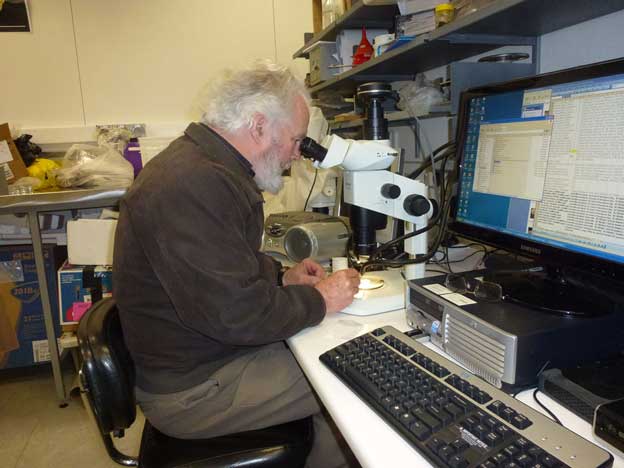
Position: Volunteer, imaging tiny objects in sharp focus. Three half-days a week, usually in the level two laboratory at DOC’s National Office.

Dave in DOC’s old lab at Victoria University

What kind of things do you do in your DOC volunteer role?

Photographing small objects in sharp focus, by merging numerous images taken at different foci using very cold light (otherwise the shell melts or is vaporized).

Producing snail posters and snail identification CDs. Snail surveys and identifying snails for DOC staff. Producing a toolbox for snail inventory and monitoring.

Left: Kokopapa unispathulata from Kaikoura. Middle top: Allodiscus from Wainuiomata. Middle bottom: Aeschrodomus stipulata from Kaka Point. Right: Liarea ornata from Matakana

What is the best part of your work?

Working with DOC staff in a pleasant working environment and receiving leaf mould containing snails from unusual locations.

What is the hardest part about your work?

Separating pictures of hairy snails and beetles from their background, pixel by pixel.

Dave looking at a tiny (pin prick-sized) still un-named snail species under a microscope. This snail was found on Great Mercury Island

What led you to your role in DOC?

Meeting inspiring people, then opportunity to pursue a long-held interest in landsnails (since 1964).

What was your highlight from the month just gone?

Very positive feedback about a poster and a quantitative snail survey I had done for, and on, Hen Island.

The rule of three…

Three loves

  1. My supportive wife Jenni.
  2. Advertising our huge diversity of small native land snails. So far over 460 species have been named with an estimated total of 1200–2000. Most are small – under 3 mm – and easily overlooked. In relation to area we have one of the most diverse land snail faunas in the world – compare this with Great Britain (of similar area) with 220 species. Also, at some localities over 60 species have been found living together, twice the highest diversity recorded anywhere else.
  3. Playing classical piano music, currently mostly Russian.

Three pet peeves

  1. Doing little about overpopulation.
  2. Tall poppy syndrome.
  3. Reflex green-bashing.

Three foods

  1. Homemade bread.
  2. Wellington’s sophisticated food variety.
  3. Jenni’s cooking.

Three favourite places in New Zealand

  1. Hen Island at dawn (dawn chorus).
  2. A grassy hillside patch surrounded by bush in the Wakarara Range near Hastings.
  3. The stunning beauty of much of the Wainuiomata Waterworks Reserve!

Favourite…

  1. Movie: The Warriors (Ancient Greek saga, set in today’s New York gangs).
  2. Album: Complete Piano Works of Federico Mompou.
  3. Book: Fredric Brown, Nightmares and Geezenstacks (SF mostly)

Dave in the lab checking out a new species of snail

Deep and meaningful:

What piece of advice would you tell your 18 year old self?

Forget pharmacy (from which I am now retired), go to university – the student talent is awesome and you are much less likely to get armed holdups.

And, laugh more.

Who or what inspires you and why?

My piano teacher, she just scored a QSM. She is patient with my foolishness. Also, most of the DOC staff, hardworking and passionate about their work.

When you were a kid, what did you want to be when you grew up?

Invisible.

And now, if you weren’t working at DOC, what would you want to be?

Working as a DOC volunteer.

What sustainability tip would you like to pass on?

Many sustainability problems relate to population levels. Individuals cannot solve overpopulation on their own. We could encourage politicians to include population optimisation in their manifestos.

Which green behaviour would you like to adopt this year – at home? At work?

  • At home, trenching or composting garden and food rubbish.
  • At work, always turning off unneeded lights and somehow being able to switch off the exhaust fan when absent.

If you could be any native species for a day, what would you be and why?

A kākāpō, being indulged and well looked after in a safe habitat.

What piece of advice or message would you want to give to New Zealanders when it comes to conservation?

We live in the best living space on Earth bar none. Please don’t ruin it.

Every Friday Jobs at DOC will take you behind the scenes and into the jobs, the challenges, the highlights, and the personalities of the people who work at the Department of Conservation.

Today we profile Murray Neilson, Technical Support Officer: Freshwater Ecosystems.

At work…

What kind of things do you do in your role?

I’m responsible for overseeing Otago Conservancy’s freshwater programme and its non-migratory galaxiid programme. I also have responsibility for overseeing the conservancy’s wetland protection role. In addition to this I’m the current Non-migratory Galaxiid Recovery Group leader. I spend much of my time advocating for freshwater habitats and species through the RMA process, gathering and presenting evidence to regional council hearings and the Environment Court.

I also represent the Department at stakeholder meetings connected with these processes. In my role as Recovery Group Leader I provide advice to Otago and other conservancies on non-migratory galaxiid protection and monitoring activities, and commission relevant research projects. Occasionally (very occasionally these days!) I get to go out with the Coastal Otago freshwater team and do some actual electric fishing survey work.

Left: In the entrance hall at Shepherdstown U.S. Fish and Wildlife Service Training Centre, on an Environmental Flows training course.
Right: One for the pot – hunting at Omaio 2010.

What is the best part about your job?

The great environments it’s been my good fortune to work in (e.g. fisheries surveys in the Otago high country as part of High Country Tenure Review – just magic!), and the many good people it’s been my privilege to work with.

What is the hardest part about your job?

Convincing other agencies of the need to give greater recognition and protection to our unique freshwater species and habitats.Understanding the various complexities of NHMS, species optimisation, priority setting etc., and dealing with the machinations of the DOC bureaucracy.

What led you to your role in DOC?

I was previously a Game Management Officer with the Wildlife Service and was stationed in Dunedin, dealing with gamebird management, wetlands and environmental planning issues from July 1975 until April 1987 when DOC subsumed the service. Prior to that I’d been an Assistant Game Management Officer in Rotorua, and before that, after completing a wildlife traineeship, an Assistant Fauna Conservation Officer working out of Wellington.

Left: Upper Ahuriri Valley. Right: Good trout from the upper Ahuriri River.

What was your highlight from the month just gone?

Pending the opening morning of the game season, duck hunting with my son Sean in the Upper Taieri wetland (quite successfully I might add!).

The rule of three…

Three loves

  1. My family
  2. My pets
  3. Otago Province

Three pet peeves

  1. Terms such as ‘going forward’, ‘change is inevitable’ (perhaps, but is it always for the good?) and other management speak
  2. Tele-marketers
  3. Over-sensitive car alarms

Three foods

  1. Slow roasted Canada goose (you have to try it, believe me!)
  2. Mushroom soup
  3. Porterhouse steak (medium rare)

Three favourite places in New Zealand

  1. The Ahuriri Valley
  2. The Maniototo basin
  3. Waipori/Waihola wetland

Favourite movie, album, book

  1. Movie – A River Runs Through It
  2. Album – The Last Waltz – The Band, and most early Bob Dylan stuff
  3. Book – This one’s hard, I read a lot and love spy thrillers and mysteries, so it’s whatever I’m enjoying at the time. My favourite authors are David Baldacci, Greg Iles, Richard North Patterson, Christopher Reichs, and Lee Child.

Left: Another for the pot – Wilberforce River 2009.
Right: Canoeing with my daughter on Lake Waihola.

Deep and meaningful

“Don’t look back – something might be gaining on you!” For some reason this line, uttered by Kris Kristofferson in the film Convoy, has stuck with me.

What piece of advice would you tell your 18 year old self?

Never give up (at least without a good fight!).

Who or what inspires you and why?

A still, late summer’s day on a free-running river, and extremely talented individuals.

When you were a kid, what did you want to be when you grew up?

A Wildlife Officer (surprisingly enough!).

And now, if you weren’t working at DOC, what would you want to be?

Retired and relaxed – which I’m shortly to be!

What sustainability tip would you like to pass on?

Forget this electric car stuff (this will eventaully lead to demand for more hydro dams, despite the current hiatus). Eco-diesel is the way to go (made from waste product, of course!).

Which green behaviour would you like to adopt this year – at home? At work?

At home (as that’s where I’ll mostly be, in future) – grow more vegetables and make more compost.

If you could be any New Zealand native species for a day, what would you be and why?

Our native falcon, kārearea – the combination of speed, agility and fearlessness is irresistable.

What piece of advice or message would you want to give to New Zealanders when it comes to conservation?

You only get one good chance at this, so do it right, and look after your freshwater habitats!